




Plaque Wording:
In Memory Of MR. JOHN HARRISON, late of Red-Lion Square, London.
Inventor of the TIME-KEEPER for ascertaining the LONGITUDE at Sea. He was born at Foulby, in the County of York, and was the Son of a Builder at that Place, who brought him up to the same Profession. Before he attained the Age of 21, He without any Instruction, employed himself in cleaning & repairing Clocks & Watches & made a few of the former, chiefly of Wood. At the Age of 25 He employed his Whole Time in Chronometrical Improvements. He was the Inventor of the Gridiron Pendulum and the Method of preventing the Effect of Heat and Cold upon Time keepers by Two Bars of different Metals fixed together. He introduced the Secondary Spring to keep them going while winding up; and was the Inventor of most (or all) of the Improvements in Clocks & Watches during his Time.
In the Year 1735, his first Time keeper was sent to Lisbon, and in 1764 his then much Improved fourth Time keeper having been sent to Barbadoes, the Commissioners of Longitude certified that it had determined the Longitude within one Third of Half a Degree of a great Circle, having erred not more than 40 Seconds in Time.
After near fifty years close Application to the above Pursuits, he departed this Life on the 24th Day of March 1776, Aged 83.

 - Beecham, Sir Thomas_ls.jpg)
Plaque Wording:
Bell Moor Hampstead Heath - The surface of the soil is here 435ft 7" above sea level or
16ft 7" higher than the top of Saint Paul's Cross


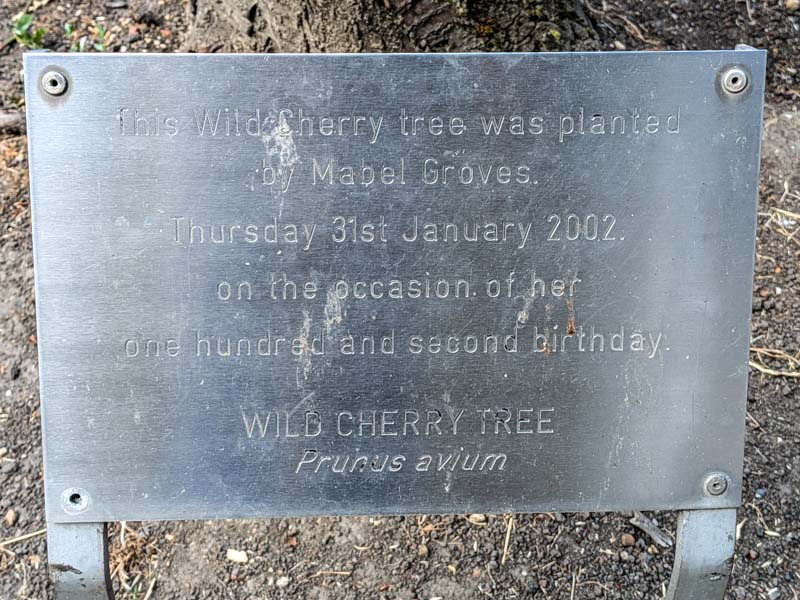
I have no information about Mabel Groves. Please contact me if you do.
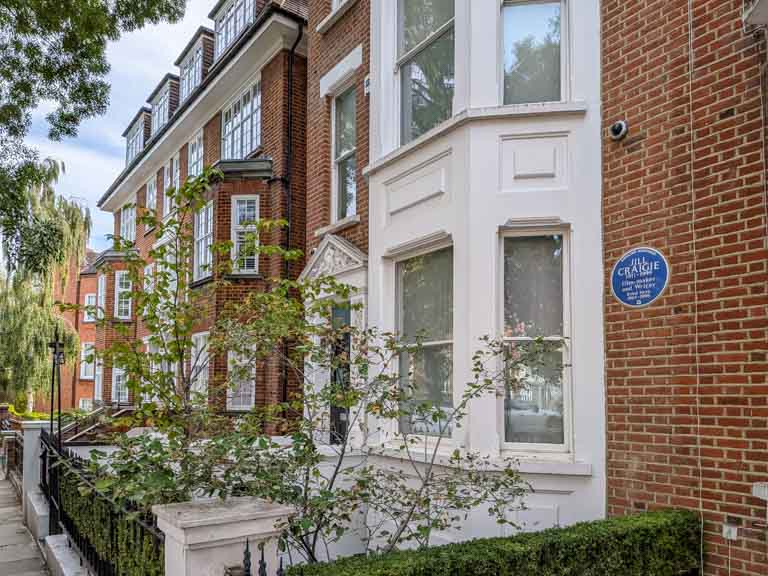


.jpg "Sponsor: Heath & Hampstead Society (inc Hampstead Plaque Fund) (id: 498)")
_ls.jpg)


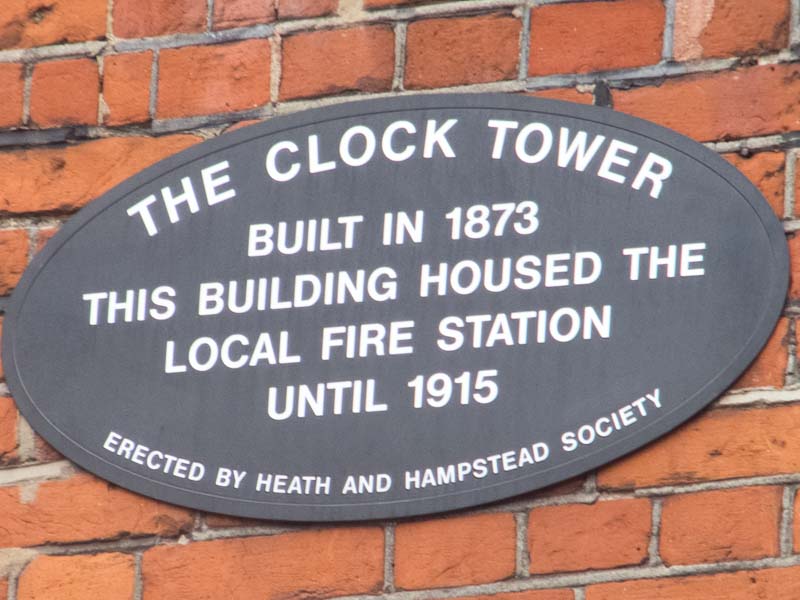
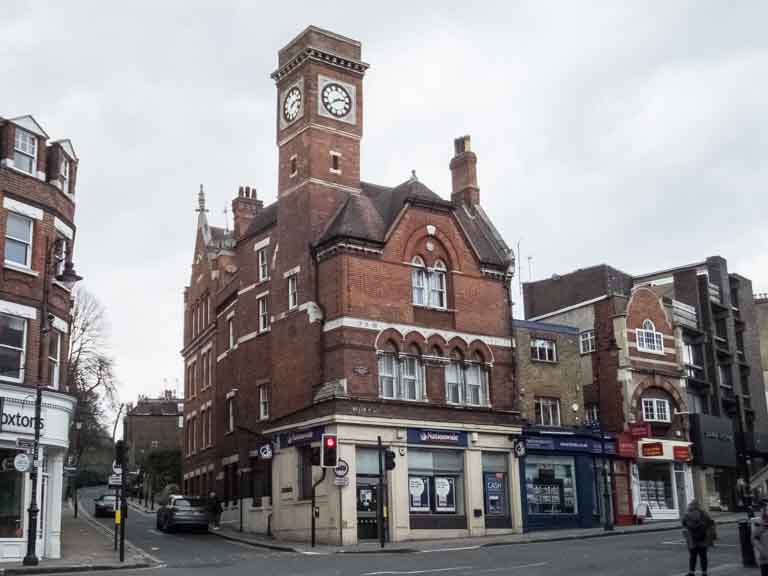


.jpg "Sponsor: English Heritage (id: 555)")
_ls.jpg)


.jpg "no sponsor (id: 871)")
_ls.jpg)
.jpg "Sponsor: Camden (id: 64)")


Plaque Wording:
This tree was planted by The Heath and Old Hampstead Society in its Centenary Year in memory of John Carswell (1918-1997) former chairman
December 1997
December 1997


Plaque Wording:
This avenue was replanted in November 1988 to replace trees destroyed by a hurricane during the night of 15/16 October 1987. Trees donated by The Heath & Old Hampstead Society, the Franklin Cole Foundation, Task Force Trees & Eric Woods Esq.
London Residuary Body
London Residuary Body
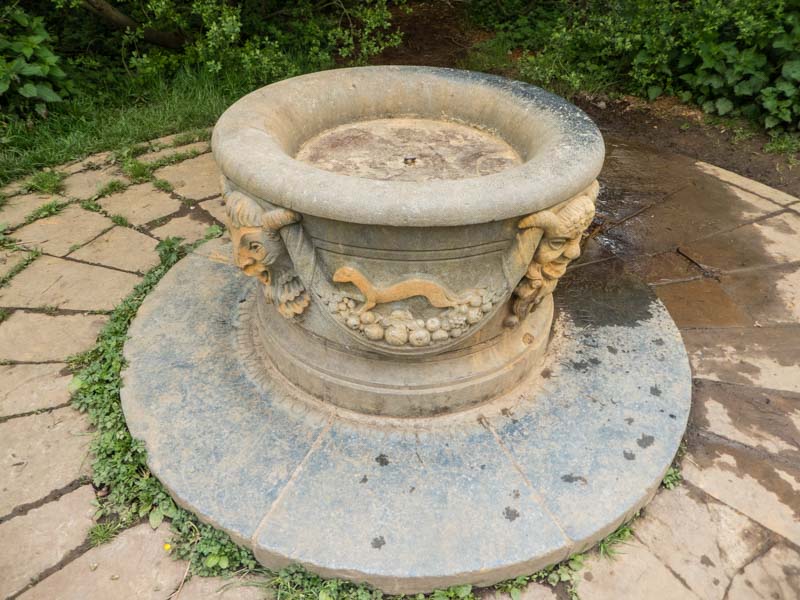
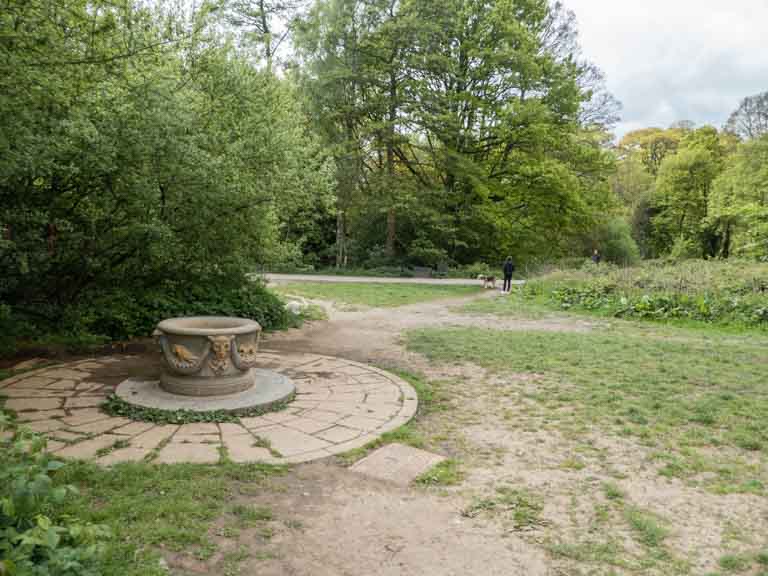
Plaque Wording:
This fountain erected in 1929 to the memory of Henry Edmund Goodison of Highgate
honorary treasurer of the Kenwood Preservation Council was presented by his wife and sons.


Plaque Wording:
The Great Storm
In the early hours of 16th October 1987, a hurricane force wind swept through Ken Wood. 54 mature trees were blown down and the wood devastated. As a site of special scientific interest, the storm damage is being repaired by careful management to encourage natural regeneration. The contributions from those listed here are helping to bring new life to the storm damaged woods.


 Postbox.jpg "Sponsor: Independent one-offs (id: 3112)")
 Postbox_ls.jpg)


 - Handel, George Frideric.jpg "no sponsor (id: 3602)")
 - Handel, George Frideric_ls.jpg)
Plaque Wording:
In 1747 these gates and railings were purchased for this church from Cannons, Edgware, the seat of James First Duke of Chandos friend and patron of the composer Handel. Originally wrought about 1715 they were restored in 1952 by Charles Hall Ltd of Hampstead.


Plaque Wording:
On this site stood Norway House and Norway Yard. By the beginning of the 19th century this fine house set in its own large garden, had become a famous boarding academy for young gentlemen. We know that in 1805 the school was run by Bidmead & Johnson, but by 1840 control was in the hands of James Hessey. There is a story in Mary Hill's "Hampstead in Light and Shade" of bread and apples being smuggled in to the hungry pupils by a kindly maidservant. The house and garden underwent further changes of use before being swept away in 1931 to make room for a garage. At a point nearby coaches set-off for London when Hampstead was a country town. Erected by the Hampstead Plaque Fund


Plaque Wording:
Golden Yard is derived from "Goulding" the family who dwelt in the Yard for about 200 years.
The first copyhold grant of 20 Rods was made by the then Lord of the Manor of Hamstede Sir Robert Wroth to Henerye Gouldingy "by the Rod at the Will of the Lord according to the custom of the said Manor by Fealty Suit of Court" in the last quarter of the 16th Century.
The area was then largely a disused sand pit, the sand no doubt used in the expansion of Elizabethan London.
Its upper boundary was along the east side of the now Holly Mount and its lower boundary along the then Cloth Hill, later called the High Road and finally Heath Street. The first cottage in which the Gouldings lived was No. 6 the yearly rental value of which was assessed in 1646 at £3.
Henry Goulding was married at the Parish Church in 1574 to Agne Bolden and they had at least 6 children, the 3rd son Edward married at the age of 12 to a local girl Elizabeth Lacraft in 1601, at which time the population of Hampstead was under 200.
Other residences were erected here by the Goulding family in the late 17th and early 18th centuries, by which time this was called "Goulding's Yard." An entry in 1758 gives the names of those entitled to use "the said Pump in the yard for water, the common necessary house and watercourses".
The properties were sold in 1779 by Sarah Goulding (then a Mrs Brown) to John Bitton, upon whose death in 1822 and as directed in his Will the small estate was sold separately, his beneficiary living at that time in Benham Place close by.
Compiled from the Manorial and other Rolls, Parish Church Register, old Title Deeds and Maps, 1960, E.R. Levett, 6 Golden Yard.


Plaque Wording:
This building was erected by voluntary contributions for a dispensary and soup kitchen. It was intended as a thank-offering to Almighty God for his special mercy in sparing this parish during the visitation of cholera in the year 1849. The site was purchased in 1850 and the building completed in 1853. He shall deliver thee from the noisome pestilence. Thomas Ainger M.A. Incumbent


Plaque Wording:
This stone was laid by Mrs Sarah A Gotto on the 13th July 1886 being the 50th Yr of the reign of Her Majesty Queen Victoria


-2.jpg "Sponsor: Independent one-offs (id: 3834)")
-2_ls.jpg)


I have no information about Robert Seaward. Please contact me if you do.


Plaque Wording:
The North Star, 104 Finchley Road. The North Star was built in 1850 as one of the first buildings to grace the new Finchley Road. This highway had been constructed in 1835 as an alternative by-pass route to the old road from London to the north, which took the gruelling haul up through the congested streets of Hampstead. The North Star was purpose built as a pub, as can be seen from the handsome exterior, which boasts attractive embossed stars at the tops of the main pillar supports. Originally above this, at roof level, was an elaborate stone balustrade and arch, but these became unsafe, and were eventually removed. However, at first floor level there remains a magnificent cast-iron Victorian balcony. The pub was once the terminus for short-haul trams out of London in the 1920's, but far closer ties with London Transport was to come in the 1930's. A decision was made to extend the Bakerloo Line (now the Jubilee line) to relieve the overcrowded Metropolitan line. In order for the new line to come to the surface between Swiss Cottage and Finchley Road stations, the Metropolitan had to be diverted, and opened in November 1939 with the southbound line in a tunnel that lies a mere three feet below the cellar floor. The rumblings of the trains can easily be heard, and felt, in the bar.


.jpg "Sponsor: Independent one-offs (id: 3841)")
_ls.jpg)
Plaque Wording:
1747 Iolo Morganwg 1826 Y gwir yn erbyn y byd The truth against the world
This is the site of the first meeting of the Gorsedd of the Bards of the Isle of Britain 22.6.1792. Yma y cyfarfu Gorsedd Beirdd Ynys Prydain gyntaf
This is the site of the first meeting of the Gorsedd of the Bards of the Isle of Britain 22.6.1792. Yma y cyfarfu Gorsedd Beirdd Ynys Prydain gyntaf


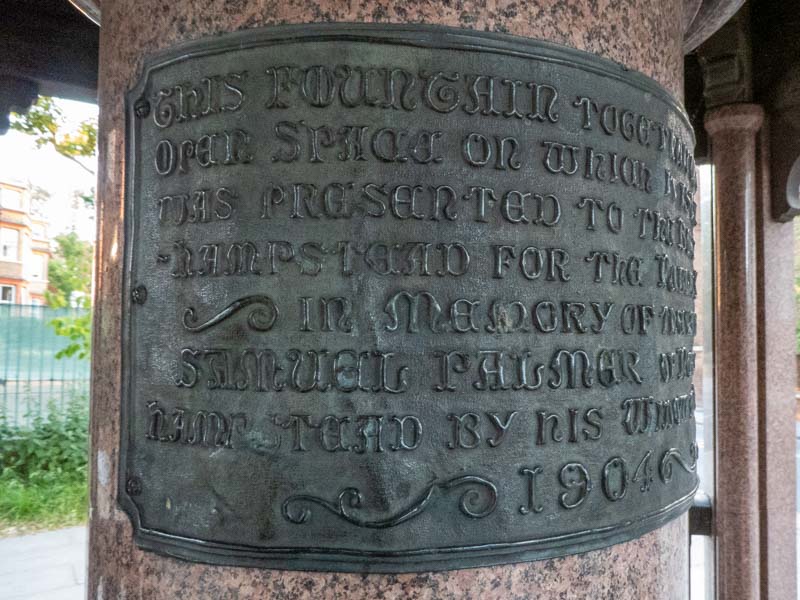
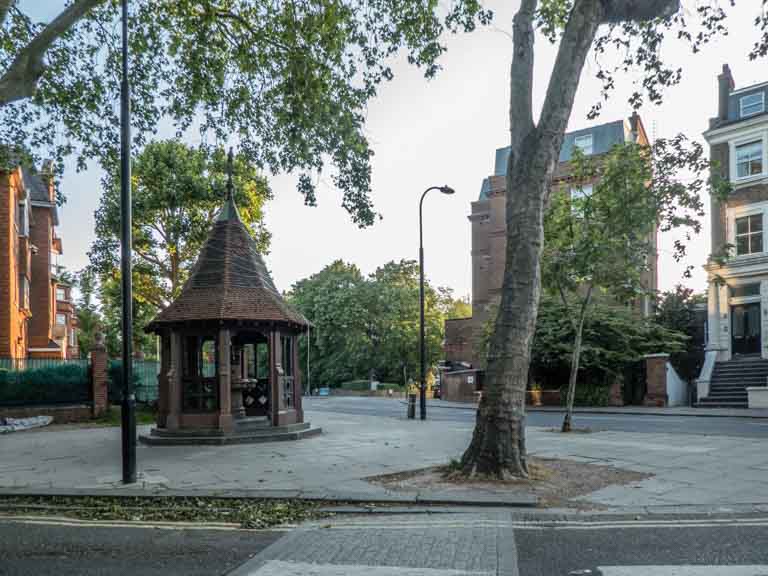
Plaque Wording:
This fountain together with the open space on which it is erected was presented to the Borough of Hampstead for the public benefit in memory of the late Samuel Palmer of Northcourt, Hampstead by his widow and family. 1904


Plaque Wording:
Hidden River 1860s. The River Fleet runs under your feet. This subterranean stream flows from the Hampstead and Highgate ponds to the River Thames


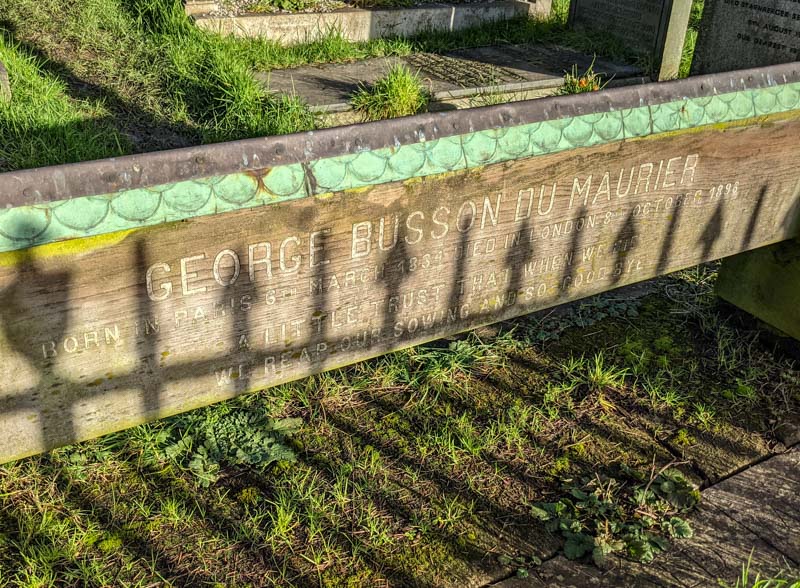
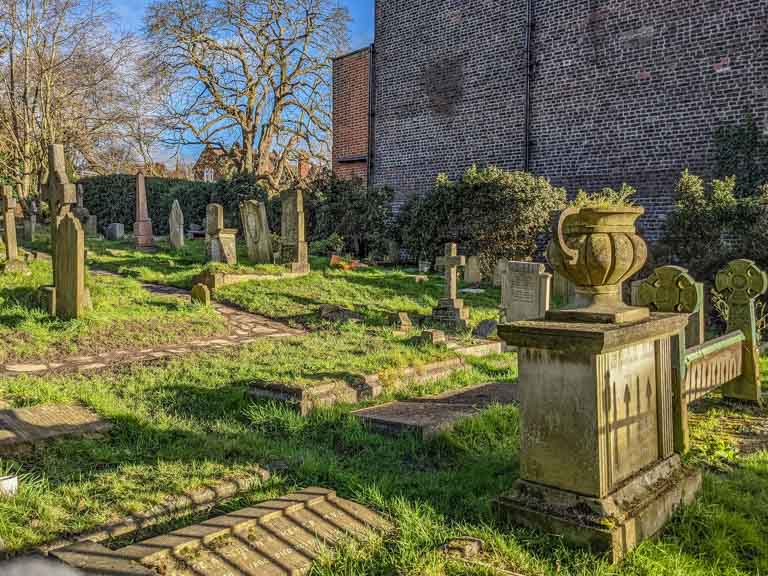
Plaque Wording:
George Busson Du Maurier Born in Paris 6th March 1834 Died in London 8th October 1896
A little trust that when we die we reap our sowing and so - goodbye
A little trust that when we die we reap our sowing and so - goodbye
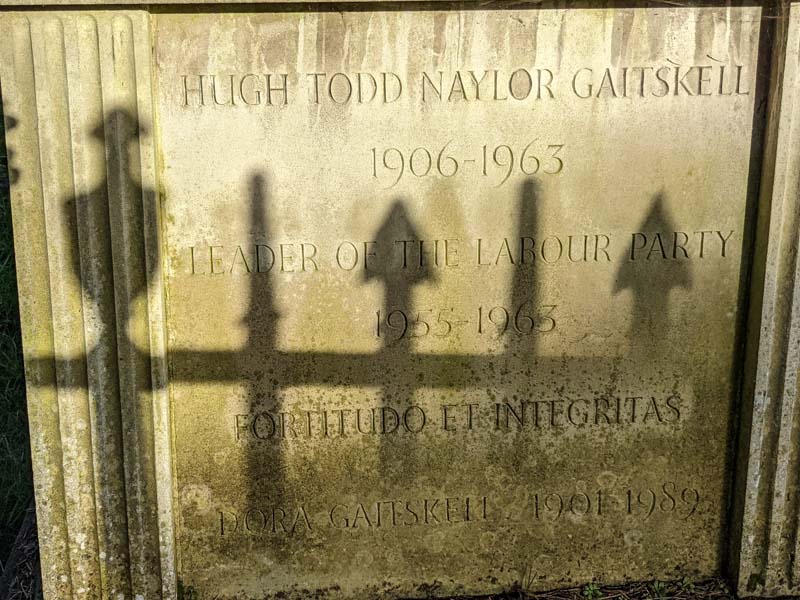


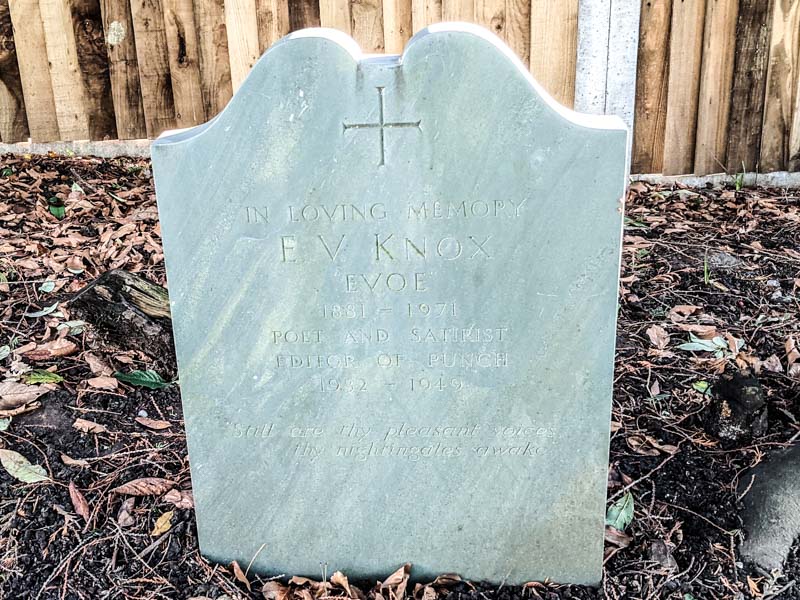

Plaque Wording:
In loving memory E V Knox Evoe 1881 - 1971 Poet and Satirist Editor of Punch 1932- 1949
Still are the pleasant voices thy nightingales awake
Still are the pleasant voices thy nightingales awake


Plaque Wording:
In memory of Walter Besant KT Born at Portsmouth 14th August 1836 died at Frognal End 9th June 1901
Write me as one that loves his fellow men.
Write me as one that loves his fellow men.


I have no information about Elizabeth Bolton. Please contact me if you do.


I have no information about Jocelyn Moore. Please contact me if you do.


I have no information about Dorothea Elsa Garwood. Please contact me if you do.


Plaque Wording:
Hampstead Parish - Centre of the Road - 1896


Plaque Wording:
Heritage Information
Chalk Farm Station
Architect: Leslie Green 1907
The station opened on 22 June 1907 on the Golders Green branch of the Charing Cross, Edgware & Hampstead Railway, one of the lines that were part of the Underground Electric Railways of London (UERL) group. Formed by the flamboyant American financier Charles Tyson Yerkes, he was determined that the UERL stations should all have a similar look - an early "corporate identity". One way to do this was to use the same architect Leslie Green, for all the group's stations.
The station is a fine example of Green's architecture, a two storey structure with its multiple identical arches and the red glazed terracotta façade. It is believed to be the longest street frontage of the original stations. The terracotta was made by the Burmantofts Fireclay Company in Leeds, West Yorkshire. The station was designed as a 'plinth' that would allow the construction of a building above - this has never happened here. Inside the station, at street level, there are fine examples of the green "pomegranate" design relief tiles. Lower down, and at platform level is the red and cream ceramic tile design. Each of the UERL tube station platform designs had a unique coloured pattern tile design. This was intended to allow regular passengers to recognise their stop. The station, refurbished several times, still has many of the original design features.
The station is a fine example of Green's architecture, a two storey structure with its multiple identical arches and the red glazed terracotta façade. It is believed to be the longest street frontage of the original stations. The terracotta was made by the Burmantofts Fireclay Company in Leeds, West Yorkshire. The station was designed as a 'plinth' that would allow the construction of a building above - this has never happened here. Inside the station, at street level, there are fine examples of the green "pomegranate" design relief tiles. Lower down, and at platform level is the red and cream ceramic tile design. Each of the UERL tube station platform designs had a unique coloured pattern tile design. This was intended to allow regular passengers to recognise their stop. The station, refurbished several times, still has many of the original design features.


Plaque Wording:
This tree was planted to commemorate the coronation of Her Majesty Queen Elizabeth June 1953


I have no information about Mark Bass. Please contact me if you do.


